

Four saints you can follow to New Orleans
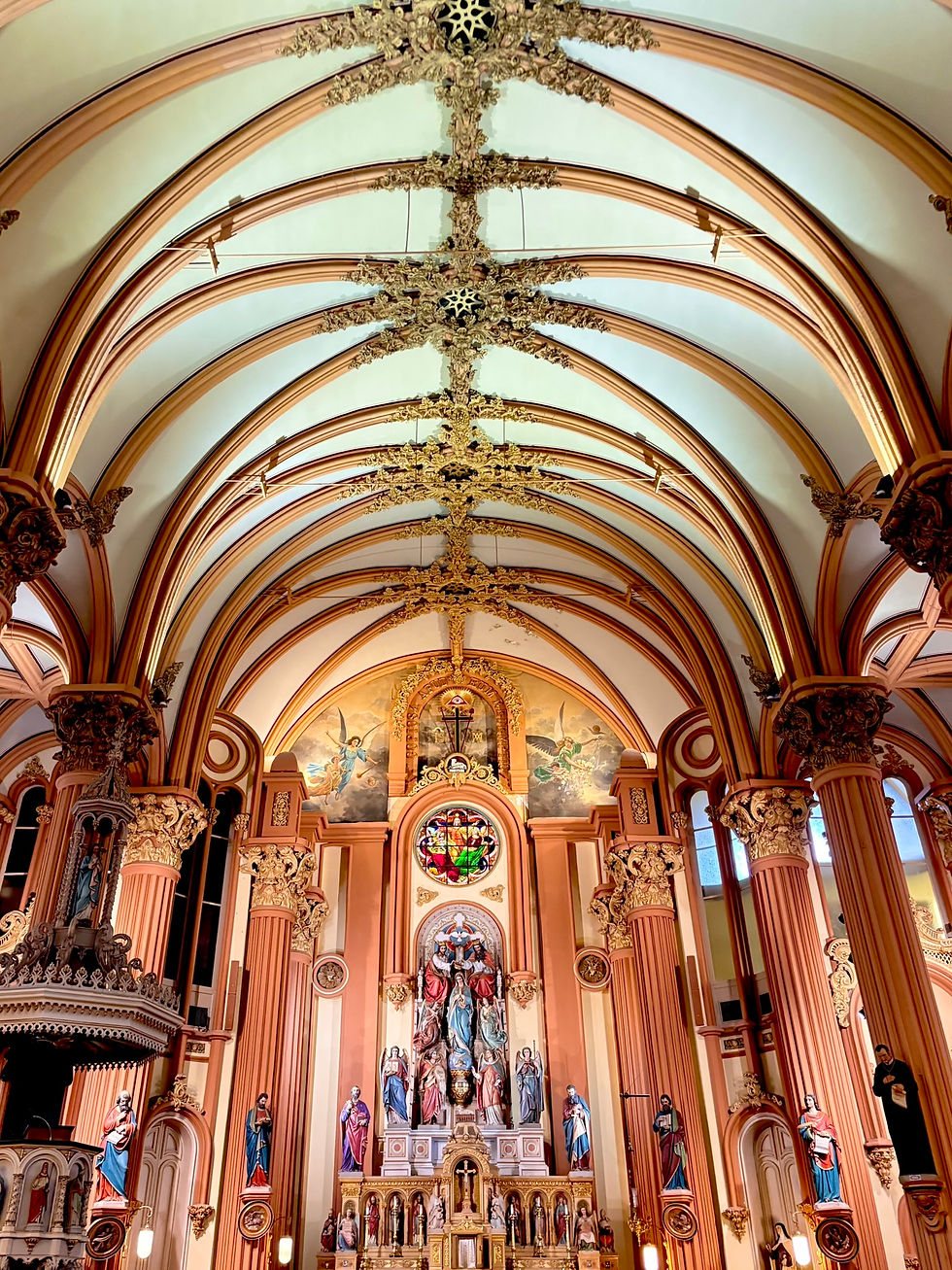
One of the best kept secrets in New Orleans is how many saints have lived, served, and died in the city. Whether you are here for a visit or a lifelong resident, there’s something powerful about physical presence to connect us with these saints. Through relics, tombs, homes, and other sacred places, we experience genuine communion with the saints who have gone ahead.
Here are four saints you can visit in New Orleans.
St Frances Cabrini
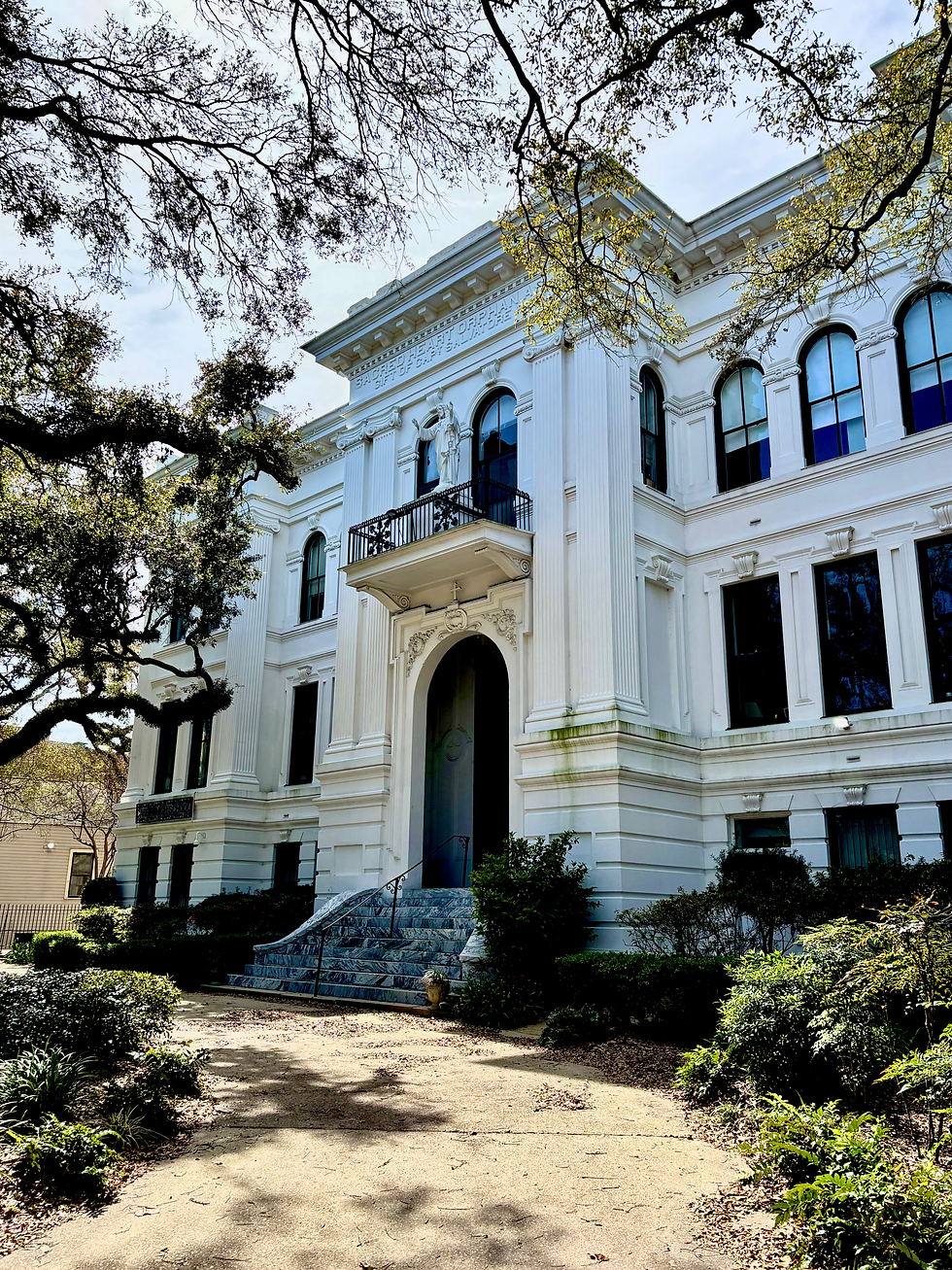
Frances Xavier Cabrini first came to New Orleans in 1892, just three years after she had left Italy to serve New York's rapidly increasing Italian immigrant community. New Orleans was also home to a large Italian immigrant community, but they suffered urgent needs amid severe local discrimination and even a horrifying lynching in 1891. Mother Cabrini and her Sacred Heart sisters immediately got to work. They purchased a French Quarter building and established an instantly successful day care, school, and orphanage.
When a yellow fever epidemic devastated the city, the increasing numbers of orphans soon outgrew their French Quarter home. Mother Cabrini quickly engaged benefactors to buy a large plot of land along Bayou St John. There, she built a convent, chapel, and much larger orphanage under the sweeping live oaks of Esplanade Avenue. The Sacred Heart sisters remained in New Orleans to serve these apostolates, with Mother Cabrini visiting frequently before her death in 1917. In 1959, the Esplanade Avenue convent and orphanage became Cabrini High School.
Frances Cabrini's New Orleans
Schedule a tour with Cabrini High School of Mother Cabrini’s chapel, residence area, and a small museum of her personal effects.
Nearby, visit another property occupied by Mother Cabrini and her sisters: the historic Pitot House, one of the city's oldest Creole-colonial structures whose interesting history of owners includes the great-grandmother of painter Edgar Degas.
Pray at St Louis Cathedral, where she went to Mass when she first arrived in New Orleans.
Pass by the French Quarter house where Mother Cabrini first established her ministry and housed her original orphanage. It’s a private residence now, but you can take in the textbook example of French Quarter architecture and get a firsthand sense of her world.

Venerable Henriette Delille
In 1812 Henriette Delille was born into New Orleans’ unique placage system, in which free women of color established liasions—but not legal marriages—with wealthy white men. Placage afforded these women a measure of stability and comfort in a stratified society, and was often regarded as their best prospect. As Henriette grew into her late teens, it’s unclear to what extent she entered into placage herself. Funeral records indicate that an unmarried Henriette eventually gave birth to two sons, both of whom died in infancy.
Although already a lifelong Catholic (like everyone else in her world), Henriette now experienced an intense conversion. Sometimes hearts don’t just break—they also break open. She began to see placage with vision clarified by suffering. She saw its damage to marriage and family. She asked to receive Confirmation, writing in her journal: “I believe in God. I hope in God. I love. I want to live and die for God."
Henriette rejected the disordered norms of her day to pursue the Gospel commission seriously. To help facilitate sacraments for the enslaved, she stood as godmother for countless children and as a witness for dozens of marriages at St Louis Cathedral. She spent her days teaching catechism classes. Eventually, Henriette wanted to give herself totally to God in consecrated life.
The religious orders already established in New Orleans rejected her on the basis of race. Undeterred, Henriette sought and gained permission to found a new order for women of color: the Sisters of the Holy Family. Their primary apostolate was something no order anywhere was doing: caring for the elderly in a home-based setting rather than massive almshouses. Mother Henriette died in 1862, but her order remains active in New Orleans. Her elderly care home remains the oldest continuously-operating one in the country.
Henriette Delille's New Orleans
Pass by Henriette’s birthplace in the French Quarter (now a private residence).
Pass by the Bourbon Orleans hotel, once the site of debaucherous balls before the Sisters of the Holy Family purchased the property for their ministry.
Henriette’s sacramental life revolved around St Louis Cathedral. See the baptismal font (in the main nave) where she served as godmother to countless enslaved children. The former baptistry room now honors Henriette with stained glass windows depicting her ministry.
Behind the cathedral, look for her memorial medallion on the sidewalk of Royal Street.
Visit her grave in St Louis Cemetery Number 2 (contact the Archdiocese to schedule a visit; the cemetery is not open to the public).
Pray at St Augustine Church in the Treme, where Henriette made her religious profession. Her funeral Mass was celebrated here in 1862.

Blessed Francis Xavier Seelos
In 1866, Redemptorist priest Fr Francis Xavier Seelos came to New Orleans to serve the large German immigrant population. He had been born in Germany himself, immigrating to the United States as a missionary in 1843. Fr Seelos spent most of his ministry in major northern cities before sailing south. Here, he quickly displayed a deep gift for pastoral care. At Mass on Sundays, he’d warmly invite the congregation to Confession: “Ah, you sinners, who have not the courage to confess your sins because they are so numerous or so grievous or so shameful. O, come without fear or trembling! I promise to receive you with all mildness.”
Fr Seelos served the city during one of its worst yellow fever outbreaks and quickly contracted the illness himself. He died in 1867 and was buried inside St Mary’s Assumption Church. After his death, as accounts of healings and conversions through his intercession began pouring in, his grave was moved to a dedicated shrine in the rear of the church. Later, a museum with artifacts of his life was added to the property.
Francis Seelos' New Orleans
Pray at his tomb in the National Shrine of Blessed Francis Xavier Seelos. You can leave intentions for yourself or others. Volunteers also staff the shrine to administer prayer and veneration with a first class relic contained in a cross owned by Seelos.
View the shrine’s collection of hundreds of relics from Apostles, martyrs, popes, and other saints.
Tour the shrine museum that tells the story of his life with dozens of interesting artifacts.
Go to Mass at St Mary’s Assumption, the parish Fr Seelos served and which houses the shrine. Don’t miss the incredible German Baroque architecture, colorful statues, and roaring historic organ.
Take a 15-minute walk over to St Mary’s Chapel, which is the original chapel built by the Redemptorists when they first came to New Orleans.

St Katharine Drexel
Born in 1858 in Philadelphia to one of America’s wealthiest banking families, Katharine grew up in a world of privilege few can imagine. When she inherited millions from her parents, Katharine began financing apostolates that served Native and Black Americans. But after an audience with Pope Leo XIII in 1887, Katharine found her ultimate vocation: the founding of a new religious order that would not only finance, but personally serve, these communities.
Mother Drexel, as she came to be called, used her vast resources to establish missions, hospitals, orphanages, and more than sixty schools across the United States. She collaborated often with Venerable Augustus Tolton, the first Black American priest. Among her most enduring works was Xavier University in New Orleans, the only historically Black Catholic university in the United States. In a culture of racism, she often faced fierce opposition—threats, vandalism, even mobs—but remained serene. Mother Drexel remained in New Orleans for a few years before moving on to her next mission field. She died in 1955 at age 96.
Related: St Katharine Drexel
Katharine Drexel's New Orleans
Pass by her former house on Magazine Street (she and her sisters occupied the third floor).
Go to Mass at St Katharine Drexel parish, a historically Black parish near the Garden District. You’ll love the unique sacred artwork and amazing choir.
Pray at morning praise or a liturgy at Xavier University’s St Katharine Drexel Chapel. See the schedule here.
Go differently
You can make any place a pilgrimage by going differently. You don't necessarily have to rearrange your plans or itinerary, but rather use the gifts all around you to contemplate the highest and deepest things. A pilgrimage is ultimately about how the natural world communicates to us about truth, love, eternity, and God. New Orleans offers an easy integration of rich pilgrimage stops between beignets and balconies.


Comments